Binary options for beginners start with risk limits and a demo account before any real deposit
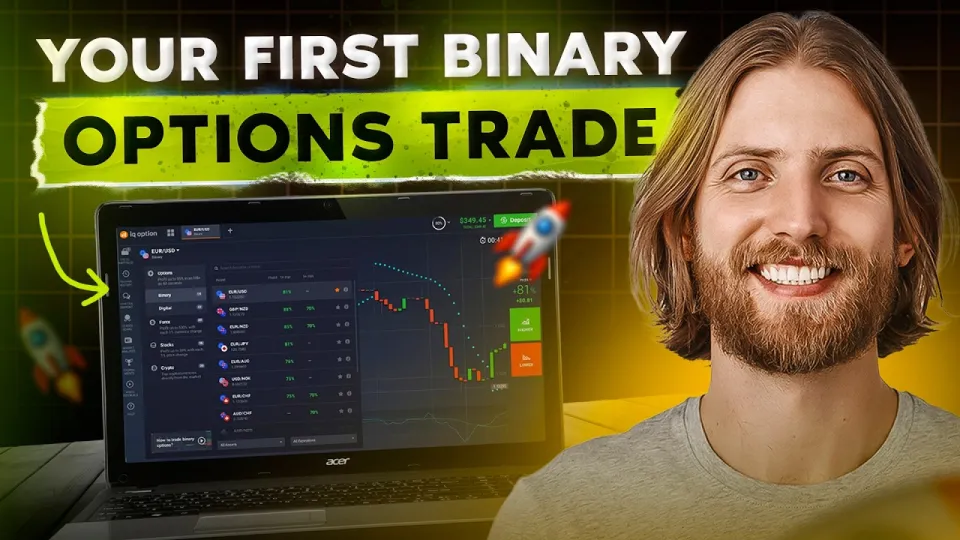
· based on the channel Binary options tutorial for beginners
Key takeaways
- A binary option pays a fixed amount if the price finishes above or below the strike at expiry, and loses the full stake otherwise.
- With a typical 80% payout, a trader needs a win rate above roughly 55.6% just to break even.
- Platforms named in the video description: Quotex, Pocket Option and Binarium.
- Risk per trade for a beginner should stay at 1-2% of the account, with a hard weekly stop.
- A demo account and a written trading plan come before any real deposit.
Binary options are fixed-risk contracts: you predict whether an asset will be higher or lower than the current price at a set expiry, and the payout or the loss is known before you click. For a beginner the correct starting point is not a signal channel but three things in order — a demo account on a regulated-adjacent platform such as Quotex registration, a written rule for risk per trade, and at least 100 logged demo trades before any real money goes in.
What a binary option actually is and how the payout math works
A binary option has only two outcomes, which is where the name comes from. You choose an asset (EUR/USD, gold, Bitcoin, a stock index), an expiry (60 seconds, 5 minutes, 1 hour, end of day) and a direction. If the price at expiry is on your side, you receive the payout percentage; if not, you lose the entire stake. There is no partial exit and no stop loss inside the trade.
The payout percentage is the single most important number on the screen. At an 80% payout, a $10 winning trade returns $8 of profit, while a losing trade costs the full $10. The break-even win rate is therefore 10 / (10 + 8) = 55.6%. At a 70% payout the break-even rate rises to about 58.8%; at 90% it falls to roughly 52.6%. Any strategy that wins less than that threshold loses money over a large sample, no matter how good individual trades look.
A second number matters just as much: the expiry. Short expiries of 60 seconds turn trading into a coin flip with a house edge, because spread and noise dominate the price movement. Beginners do better with 15-minute to 1-hour expiries on liquid instruments, where a technical setup has time to play out.
A step-by-step start on a demo account
- Register on a platform and open a demo account. Quotex, Pocket Option and Binarium all offer demo balances; the video description points to all three, and the Quotex link is the one used above.
- Pick two instruments only — typically EUR/USD and one index or gold — and watch them for a week without trading.
- Choose one setup and write it down: for example, a bounce from a level confirmed by RSI below 30 on a 15-minute chart.
- Set the stake at 1% of the demo balance and keep it fixed regardless of wins or losses.
- Log every trade: date, asset, expiry, direction, setup, result. After 100 trades, calculate the win rate and compare it with the break-even rate for your payout.
- Only if the win rate sits clearly above break-even over 100+ trades does a small real deposit make sense.
Risk rules that keep a beginner in the game
The most common way beginners lose an account is not a bad strategy but position sizing. With a 1-2% stake per trade, ten consecutive losses cost 10-20% of the balance, which is recoverable; with a 10% stake, the same streak wipes out two-thirds of the account. Set a daily loss limit (for example 5% of the balance) and a weekly one (10%), and stop trading when either is hit.
Martingale — doubling the stake after a loss — is the second classic trap. It requires an unlimited balance and no table limits, and neither exists in practice; five losses in a row at a doubling sequence turn a $10 start into a $320 stake. Fixed sizing plus a written plan beats any recovery scheme.
Also check what you are trading with: payout percentage, minimum stake (often $1), expiry options, withdrawal fees and processing time. Withdraw a small amount early to confirm the process works before scaling up.
Typical beginner questions and doubts
Most questions from new viewers of beginner tutorials circle the same points. The first is whether the platform links in the description are safe: they are affiliate links to the brokers named, so the trader should verify licensing, read the withdrawal terms and test with a minimum deposit rather than trusting any referral. The second is whether a VPN is needed — the description lists NordVPN, but a VPN does not change the trading outcome and should never be used to bypass a broker's country restrictions, since that can void an account during withdrawal.
The third recurring doubt is about signals and paid groups. A signal tells you nothing about the payout math or your stake size, and copying trades removes the only thing a beginner can actually control: risk. The fourth is about the minimum deposit — most platforms start at $10-50, and the honest advice is to deposit only what you are fully prepared to lose, because binary options are high-risk products and most retail traders end up negative.
Binary options platforms named in the breakdown
- Quotex — open the Quotex page from the video
- Pocket Option — open the Pocket Option page from the video
- Binarium — open the Binarium page from the video
- NordVPN — open the NordVPN page from the video
All four are affiliate links, which means the channel may earn a commission if you register through them. That does not change the price you pay, but it does mean the platforms are presented as recommendations, and due diligence stays with you: check regulation in your jurisdiction, read the client agreement, and start on demo.
Conclusion
Binary options reward discipline far more than prediction: fixed stakes of 1-2%, expiries long enough for a setup to work, and a win rate measured against the break-even threshold of your payout are what separate a plan from gambling. Start on demo, log at least 100 trades, and only then consider a small real deposit through the Quotex sign-up page or one of the alternatives listed above. The video breakdown on the channel Binary options tutorial for beginners walks through the same starting sequence for anyone who prefers to follow it visually. Treat every trade as a fixed cost you have already accepted, and the account will last long enough for skill to matter.
Questions & answers
How much money do I need to start trading binary options?
Most platforms accept a minimum deposit of $10-50, and the minimum stake per trade is often $1. A practical starting balance is one where a 1-2% stake still feels meaningful, so around $100-200 on a live account after demo practice. Never deposit money you cannot afford to lose entirely.
What win rate do I need to be profitable?
It depends on the payout. At 80% you need more than 55.6% winning trades to break even, at 70% about 58.8%, and at 90% roughly 52.6%. Track your results over at least 100 trades before judging a strategy.
Are the platform links in the video description trustworthy?
They are affiliate links to Quotex, Pocket Option, Binarium and NordVPN, so the channel earns a commission on registrations. Verify the broker's licensing and withdrawal terms yourself, test with a minimum deposit, and try a small withdrawal early to confirm the process works.
Is martingale or doubling after a loss a good idea?
No. Doubling requires a large balance and has no table limit in practice; five losses in a row turn a $10 stake into $320. Fixed position sizing of 1-2% with a daily and weekly loss limit is the safer approach for beginners.
Source: Binary Options | Binary Options Tutorial for Beginners | Where Should You Start? · Markdown version